
Fuel is the single biggest operating expense for most trucking operations, often eating up 20% or more of total cost per mile. A truck averaging 6.5 mpg instead of 6.0 mpg saves roughly 1,280 gallons over 100,000 miles. At today’s diesel prices, that’s thousands of dollars per truck, per year, back in your pocket. Multiply that across a fleet and fuel economy stops being a nice-to-have and becomes a line item worth managing.
The good news is that most of the factors that drag down fuel mileage are within your control. Some are driving habits. Some are maintenance. And one that gets overlooked far too often sits bolted to the side of your engine: the turbocharger. Here’s how to attack fuel economy from every angle.
How Does Driving Style Affect Fuel Economy in a Semi-truck?
Driving style is the fastest and cheapest way to improve fuel economy, because it costs nothing to change. The difference between an efficient driver and a heavy-footed one in the same truck can be a full mile per gallon or more.
Speed is the biggest factor. Aerodynamic drag increases exponentially as you go faster, and most heavy-duty trucks see fuel economy drop noticeably above 60-65 mph. Every mph over 60 costs you at the pump. If your schedule allows it, backing off the throttle by even 3-5 mph adds up fast over a long haul.
A few other habits worth building:
- Use cruise control on flat highway stretches to hold a steady speed instead of constantly surging and coasting.
- Practice progressive shifting. Keep RPMs low and shift early rather than winding out each gear.
- Anticipate traffic. Coasting toward a red light burns less fuel than braking hard and accelerating from a dead stop.
- Cut the idling. A heavy-duty diesel can burn close to a gallon of fuel per hour at idle. An APU, bunk heater, or shore power hookup pays for itself if you spend nights in the sleeper.
None of this is complicated. It just takes discipline, and for fleets, it takes driver training and telematics data to keep everyone honest.
What Maintenance Keeps a Semi-truck Fuel Efficient?
Preventive maintenance protects fuel economy the same way it protects uptime. A neglected truck works harder to do the same job and working harder means burning more diesel.
Start with tires. Underinflated tires increase rolling resistance, and rolling resistance accounts for a big share of the energy your engine must overcome. Check pressures regularly, not just at PM intervals, and consider low rolling resistance tires when it’s time to replace. Wheel alignment matters too. A tractor or trailer that’s dog-tracking down the highway is scrubbing rubber and wasting fuel every mile.
Under the hood, keep up with the basics. A clogged air filter starves the engine of the airflow it needs for clean, complete combustion. Dirty fuel injectors spray poorly atomized fuel that doesn’t burn efficiently. Old engine oil with the wrong viscosity increases internal friction. And a DPF that’s overdue for cleaning creates exhaust backpressure that forces the engine to push against its own plumbing.
Your ECM is also worth a look. Fault codes related to boost pressure, EGR flow, or aftertreatment can quietly cost you fuel long before they trigger a derate. If your check engine light has been on for weeks and mileage has been slipping, those two things are probably related.
How Much Does Aerodynamics Matter for Fuel Economy?

At highway speeds, more than half of your engine’s output goes to pushing air out of the way. That’s why aerodynamic equipment has become standard on so many fleets. Roof fairings, side skirts, and trailer tails all reduce drag, and closing up the tractor-trailer gap helps air flow smoothly instead of tumbling into the space between them.
You don’t need to buy every device on the market. Even small things help like keeping the fifth wheel positioned to minimize the gap, removing unused external equipment, and making sure flatbed loads are tarped tight instead of flapping in the wind. If the air has to fight its way around your truck, your fuel tank pays for it.
Can a Bad Turbocharger Hurt the Fuel Economy?
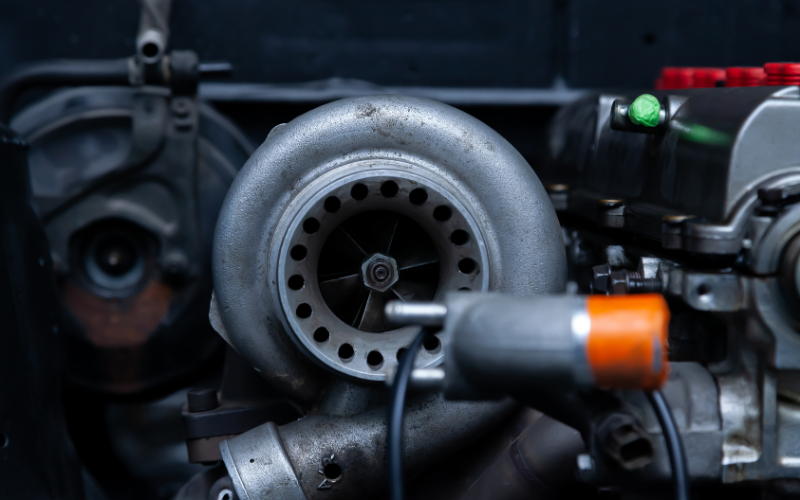
Yes, and this is the factor most drivers and even some fleet managers overlook. Your turbocharger exists to improve fuel efficiency. It recycles energy from the exhaust stream to force more air into the cylinders, which lets the engine burn fuel more completely and make more power from every gallon. When the turbo is healthy, you get a strong boost, clean combustion, and the mpg your truck was designed to deliver.
When the turbo starts to fail, that equation runs in reverse. Worn bearings, damaged compressor wheels, sticking VGT vanes, or a failing actuator all mean less boost reaching the engine. The ECM compensates by adding fuel, the engine works harder to maintain speed, and your fuel economy quietly bleeds away. Many operators lose half a mile per gallon or more to a weak turbo without ever seeing a check engine light.
Watch for these warning signs:
- A gradual drop in fuel mileage with no change in routes or loads
- Sluggish acceleration or noticeable loss of power on grades
- Black smoke from the stack, which means unburned fuel going out the exhaust
- Whining, grinding, or siren-like noises from the turbo
- Excessive oil consumption or oil in the intake piping
- Boost pressure or turbo actuator fault codes
If you’re seeing any of these, get the turbo inspected before it takes your fuel budget, or the whole engine, down with it. A failed turbo can send shrapnel and oil downstream, turning a repair into a rebuild.
Is a Remanufactured Turbo a Smart Choice for Fuel Economy?
A quality remanufactured turbocharger restores the boost, response, and efficiency your engine had when it was new, at a fraction of the cost of a new OEM unit. The key word is quality. A turbo that isn’t properly balanced or tested will never deliver the airflow your engine needs, no matter what the price tag says.
At HD Turbo, every unit we remanufacture is built to meet or exceed OEM specifications. Our balancing machines don’t just balance turbo shafts; they balance complete heavy-duty turbochargers at speeds up to 300,000 RPM. Every turbo is flowbench tested and inspected for oil leaks before it ships, so it performs the way your engine expects from the first mile.
Get Your Fuel Economy Back with a Remanufactured Turbo from HD Turbo
If a tired turbocharger is dragging down your fuel mileage, don’t keep paying for it at every fill-up. Browse our full selection of remanufactured heavy-duty turbochargers for Cummins, Detroit, Paccar, Mack, and Volvo engines. Every turbo comes backed by our 12 month, unlimited mile warranty, so you can put it to work without watching the odometer.
Not sure which turbo fits your truck? Send us your VIN or engine serial number through the FIND PARTS NOW button on our website and our team will identify the exact match. You can also call us at (847) 258-3785. We ship to all 50 states, and with fast nationwide shipping on in-stock parts, you’ll be back on the road burning less fuel in no time.
Mission
We have ONE GOAL – provide you with a MORE POWERFUL and MOST RELIABLE turbocharger for years to come.
High Quality Products
Heavy-duty turbochargers are high-quality, produced in a state-of-the-art facility capable of balancing turbo components as well as whole rotating assemblies. Strict quality control.
Great Team
Our dedicated and detail-oriented team is always happy to help you – don’t hesitate to reach out with questions or comments.
NEED HELP?
GOT QUESTIONS?
Want to talk to our support team? Call us at (847) 258-3785
WE SHIP TO ALL 50 STATES. ORDER TODAY
HD Turbo ships diesel turbo parts and actuators to all 50 states.
-
Fast nationwide shipping on in-stock parts
-
Free return label to return the core (excl. Alaska, Hawaii, Puerto Rico).
-
Technical support available
SHOP
Product Categories
Diesel Turbos by Brand
- Cummins Turbos
- Detroit Turbos
- Paccar Turbos
- Mack Turbos
- Volvo Turbos
- Dodge Ram Turbochargers
- Mercedes Sprinter Turbos
Diesel Turbo Actuators by Brand
- Cummins Actuators
- Detroit Turbo Actuators
- Paccar Trubo Actuators
- Mack Truck Turbo Actuators
- Volvo Truck Turbo Actuators
Popular Diesel Turbos
- 6.7 Cummins Turbochargers
- Holset Turbos
- Cummins ISX Turbo
- Volvo D13 Turbos
- Mack MP8 Turbocharger
- Mack E7 Turbos
- HE451VE Turbos
Popular Diesel Turbo Actuators

2250 Estes Ave,
Elk Grove Village, IL 60007
Mon-Fri: 8AM - 4.30PM
Sat: 8AM - 12.00PM
Sun: Closed
 Authorized Dealer
®2018-2026 HD Turbo, LLC. All rights reserved.