Key Insights
- PACCAR’s first-line response to many EPA21 MX injector complaints is cleaning, not replacement. Bulletin E290 documents a cleaning procedure for EPA21 MX-13/MX-11 engines over 10,000 miles: 3.6 SRT hours, SRT B44-FSC, claimable under applicable warranty.
- The objective clean-or-replace criterion is measurable: on the DAVIE4 Check Fuel System Health test, average cylinder unbalance should be within ±6 rpm during the stable phase, 18–37 seconds.
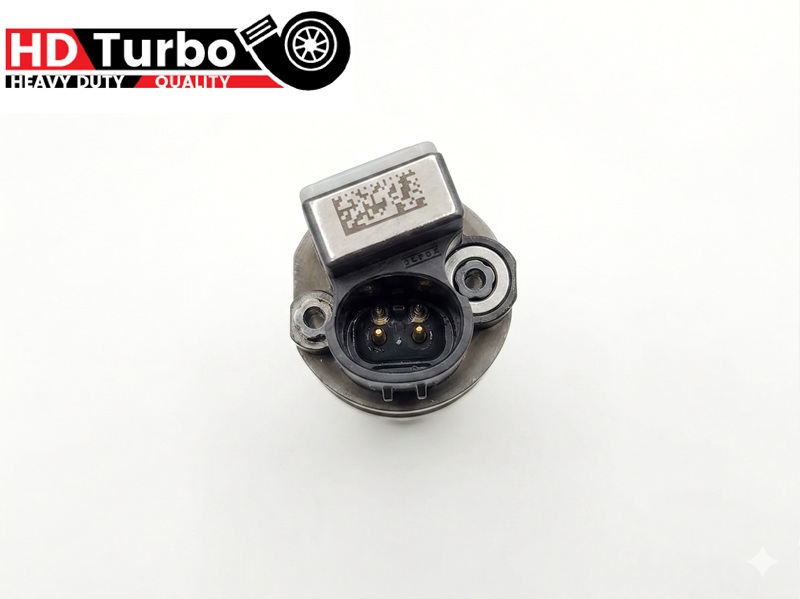
- Bulletin E318 (Pack 2) requires EPA21 MX injectors to be replaced as a complete set of six with a simultaneous software update. MX-13 part 2426856PEX; MX-11 2434417PEX / 2461236PEX.
- PACCAR warns that a software/injector mismatch can cause severe engine and aftertreatment damage. Only proceed on chassis flagged in SIR. This is the clearest example yet of injectors becoming half of a hardware/software pair on new Class 8 platforms.
- Bulletin E326: injector connector shell 1439888PE locking tabs break during valve train casing work. Previously this meant replacing the whole casing assembly. Stock the shells before you open it up.
- High-pressure injection pipes are not designed for indefinite reuse. Wait one minute after key-off before working on high-pressure components, reinstall labelled pipes in original positions, and run the DAVIE4 injector back-leak test after the repair.
- EPA10–EPA17 MX engines are the sweet spot for remanufactured injectors. EPA21+ requires the software question answered first.
If you run EPA21 MX-13 or MX-11 engines in Kenworth or Peterbilt trucks, there is a specific piece of knowledge that will save you money: PACCAR’s first-line answer to a lot of MX injector complaints is not replacement. It’s a documented cleaning procedure.
There’s also a much more serious piece of knowledge, on EPA21 MX engines, injectors and engine software are paired, and PACCAR warns that mismatching them can cause severe engine and aftertreatment damage. Getting this platform wrong is not like getting an older platform wrong.
This guide walks through what PACCAR has published, what the diagnostic thresholds are, and how to decide between cleaning and replacing.
The MX Platform in Brief
| Platform | Displacement | Emissions families | Fuel system | Trucks |
| MX-13 | 12.9L | EPA10, EPA13, EPA17, EPA21, EPA24 | High-pressure common rail | Kenworth T680/T880, Peterbilt 579/567 |
| MX-11 | 10.8L | EPA17, EPA21, EPA24 | High-pressure common rail | Regional and vocational applications |
PACCAR MX engines use high-pressure common rail with ECM-managed injector control, and the platform’s diagnostics run through DAVIE4, PACCAR’s proprietary service tool. Unlike Cummins INSITE or Detroit DiagnosticLink, a great deal of MX fuel-system diagnosis is only accessible through DAVIE4, which shapes how independent shops can and can’t work on these engines.
Part numbers vary by emissions family, and this platform supersedes aggressively:
| Part number | Application |
| 2047600PEX | MX-13, roughly 2018–2021, EPA17 — Delphi equivalent BEBJ1D04001 |
| 1972591PEX | MX-13, Delphi |
| 2426856PEX | MX-13 EPA21/EPA24 — the “Pack 2” design-improved injector, supplied singly |
| 2434417PEX / 2461236PEX | MX-11 EPA21/EPA24, supplied as sets of six |
| 1439888PE | Injector connector shell — a wear/breakage item, see below |
| 2185362PE | MX-13 EPA21 fuel rail |
Start with the E290 Cleaning Procedure
This is the part most people don’t know, and it can be the difference between a three-and-a-half-hour job and a full set of injectors.
PACCAR service bulletin E290 documents an EPA2021 MX fuel injector cleaning procedure applicable to all chassis with an EPA21 MX-13 or MX-11 engine with more than 10,000 miles. It exists because EPA21 MX engines past 10,000 miles were presenting a recognized set of DTCs and drivability symptoms that respond to cleaning rather than replacement.
Key facts from the bulletin:
- Applicability: EPA21 MX-13 or MX-11, greater than 10,000 miles.
- Standard Repair Time: 6 labor hours, SRT number B44-FSC.
- A cleaning procedure claim can be filed under any applicable warranty for the affected chassis. If your truck is in warranty, this may cost you nothing.
- The procedure also provides criteria for determining whether injector replacement is necessary, so it functions as a diagnostic gate, not just a repair.
The published procedure detail is worth reading in full if you’re doing the work. With this procedure, cleaning solution is circulated through the fuel filtration module using a cleaning tool, the engine is run at idle for one minute, then at 1,200 rpm for 20 minutes, then three consecutive DAVIE4 Check Fuel System Health tests are run back-to-back, chassis fuel lines are reconnected, and the module flushed, and results are verified.
The threshold that matters. On the DAVIE4 Check Fuel System Health test, average unbalance for each individual cylinder should be within ±6 rpm during the stable phase of the test, at 18 to 37 seconds. That number is your objective clean-or-replace criterion. It’s far better than a subjective judgement about how the engine sounds.
One procedural caution from the bulletin; if the vehicle has NA31 RC1 software, do not perform the injector calibration procedure. And if the calibration procedure was run and DAVIE4 reports “Service is not run for the specific cylinder” across all six cylinders, disregard those results and continue.
The E318 Pack 2 Injector Campaign and the Warning that Comes with It
PACCAR bulletin E318 covers a redesigned injector for EPA2021-compliant MX-series engines. The published bulletin sets out terms that are unusual and important:
- Injectors must be replaced as a complete set of six. Not one, not three.
- Associated software must be updated at the same time.
- Applies to selected EPA2021 MX-11 and MX-13 engines identified by PACCAR, with affected chassis flagged in SIR. PACCAR contacts dealers and customers directly.
- Recommended part numbers: 2426856PEX for MX-13 (package of 1), 2434417PEX or 2461236PEX for MX-11 (package of 6).
- The associated parts list includes six flange bolts (1313120PE), valve cover gasket, valve train casing gasket, fuel filter element set with O-rings, and fuel filtration module O-rings and sealing ring; i.e. this is a substantial teardown, not a swap.
| ⚠ The critical warning, in PACCAR’s own words: Do not attempt to replace injectors or update software on chassis where customers have not been notified and vehicles are not flagged in SIR. A software/injector mismatch can cause severe engine and aftertreatment damage. |
Read that carefully, because it has a strategic implication beyond this single repair. On EPA21 and later MX engines, the injector is no longer a standalone mechanical part, it is half of a hardware/software pair. That is the direction the entire Class 8 industry is moving, and it changes how you should think about injector sourcing on the newest platforms. On EPA10 through EPA17 engines, a correctly specified, correctly tested injector is a correctly specified injector. On EPA21+, you also need to know what software the engine is running.
Practical guidance: If you have an EPA21 MX engine with injector symptoms, check whether the chassis is flagged in SIR before doing anything else. If it is, this is a dealer-coordinated campaign repair, and you should let it be one. If it isn’t, work the E290 cleaning procedure first.
E326 — The Connector Shell Nobody Expects
A smaller but genuinely useful one. Bulletin E326 covers EPA17–EPA21 MX-13 engines and documents that the locking tabs on the injector connector shell, part number 1439888PE, can break when injectors are disconnected or the valve train casing is removed.
The history here is worth knowing; connector shells were not previously available separately, which meant a broken locking tab required replacing the entire valve train casing assembly. They’re now stocked individually, and PACCAR advises dealers to keep them on the shelf to prevent downtime.
If you’re going into an MX-13 valve train casing for any reason, injectors, rocker work, anything, have connector shells on hand before you start. This is the kind of detail that turns a one-day job into a three-day job when you don’t know it.
High-Pressure Fuel Lines: Do Not Assume Reuse
PACCAR’s MX-13 service documentation is unusually explicit on this point, and it’s worth quoting the principle because it applies well beyond this platform. The service manual states that high-pressure fuel injection pipes are not intended to be reused indefinitely, that pipes and connections must be properly checked before any reuse, and that damaged or incorrectly installed injection pipes can cause hot fuel leakage and flammable gases or vapors.
Additional handling requirements from the same documentation:
- Wait at least one minute after switching off the ignition before working on high-pressure fuel components. Pressure in the common rail and injection pipes bleeds down slowly and is present even with the engine off.
- If reusing a pipe, install the labelled pipe in its original position, pipes are not interchangeable between positions.
- When all injection pipes are replaced, loosen all rail attachment bolts first and hand-tighten them before final torque, to avoid bending the pipes.
- On some models the cab must be raised to install the pipes without bending them.
- Always check the high-pressure system for leaks after loosening or replacing pipes and perform the DAVIE4 “Evaluate injector back leak” test after the repair. If that test cannot be completed successfully, do not reuse the pipe.
Clean or Replace — The Decision
| Finding | Action |
| EPA21 engine, >10,000 mi, recognized DTCs/symptoms, not SIR-flagged | Run the E290 cleaning procedure first. 3.6 SRT hours, potentially warranty covered. |
| Post-cleaning cylinder unbalance within ±6 rpm on DAVIE4 stable phase | Cleaning succeeded. Return to service. |
| Cylinder unbalance outside ±6 rpm after cleaning | Second cleaning attempt per bulletin, then replacement |
| Chassis flagged in SIR for E318 | Dealer-coordinated Pack 2 campaign: full set of six plus simultaneous software update. Do not attempt independently. |
| EPA17 or earlier, confirmed injector failure | Standard injector replacement. Remanufactured units are a sound option here. |
| Broken connector shell locking tabs found during teardown | Replace shell 1439888PE — no longer requires a whole valve train casing |
| Repeat failure | Investigate fuel quality, water contamination, and filtration before spending again |
Where Remanufactured Injectors Fit on this Platform
Honestly and specifically:
- EPA10 through EPA17 MX engines are a good fit for quality remanufactured injectors. The hardware is mature, cores are available, part numbers are stable enough to verify against an ESN, and there’s no software-pairing constraint. This is where the value is.
- EPA21 and later requires more care. If the chassis is in an active PACCAR campaign, use the campaign. If it isn’t, and the engine needs injectors outside the campaign, the software-pairing question has to be answered before parts are ordered, which means knowing the current engine software level, not just the part number.
We’d rather tell you to go to the dealer for a campaign repair than sell you a set of injectors that shouldn’t go in your truck. Send us your VIN or engine serial number through the Make Sure It Fits form and we’ll tell you which situation you’re in before you spend anything.
We supply remanufactured injectors across the PACCAR MX-13 and MX-11 range built on genuine OEM cores, flow-tested and leak-tested to OE specification, with a 12-month unlimited-mileage warranty, shipped nationwide from Elk Grove Village, Illinois.
PACCAR MX-13 and EPA21 Injectors FAQs
Can PACCAR MX-13 injectors be cleaned instead of replaced?
Yes, and PACCAR documents the procedure. Service bulletin E290 provides a fuel injector cleaning procedure for EPA2021 MX-13 and MX-11 engines with more than 10,000 miles that addresses a recognized set of diagnostic trouble codes and symptoms. The Standard Repair Time is 3.6 labor hours under SRT number B44-FSC, and the claim can be filed under any applicable warranty for the affected chassis. The bulletin also provides criteria for determining whether replacement is genuinely necessary, so it functions as a diagnostic gate as well as a repair.
What is the DAVIE4 Check Fuel System Health test threshold for MX injectors?
On the DAVIE4 Check Fuel System Health test, average unbalance for each individual cylinder should be within plus or minus 6 rpm during the stable phase of the test, measured between 18 and 37 seconds. This is the objective pass criterion for deciding whether cleaning has succeeded or whether injector replacement is required.
Do PACCAR MX-13 EPA21 injectors have to be replaced as a full set?
Under PACCAR's E318 campaign for EPA2021-compliant MX engines, yes. The bulletin specifies that injectors must be replaced as a full set of six and that the associated engine software must be updated at the same time. PACCAR identifies affected chassis and flags them in SIR, contacting dealers and customers directly.
What happens if MX-13 injector software and hardware do not match?
PACCAR explicitly warns that a software and injector mismatch can cause severe engine and aftertreatment damage. The bulletin instructs that injectors should not be replaced and software should not be updated on chassis where customers have not been notified and vehicles are not flagged in SIR. On EPA21 and later MX engines, the injector should be treated as half of a hardware and software pair rather than as a standalone mechanical part.
What is the part number for a PACCAR MX-13 injector?
It depends on the emissions family. Commonly encountered numbers include 2047600PEX for approximately 2018–2021 EPA17 MX-13 engines, with Delphi equivalent BEBJ1D04001; 1972591PEX as another Delphi MX-13 unit; and 2426856PEX as the EPA21/EPA24 design-improved Pack 2 injector. MX-11 EPA21/EPA24 sets use 2434417PEX or 2461236PEX. PACCAR supersedes part numbers frequently, so verify against your engine serial number before ordering.
What is part number 1439888PE on an MX-13?
1439888PE is the fuel injector connector shell. PACCAR bulletin E326 documents that the locking tabs on this shell can break when injectors are disconnected or the valve train casing is removed on EPA17 through EPA21 MX-13 engines. Because the shells were not previously available separately, a broken tab used to require replacing the entire valve train casing assembly. They are now stocked individually, and PACCAR advises keeping them on hand to prevent downtime.
Can MX-13 high-pressure fuel injection pipes be reused?
Not indefinitely. PACCAR service documentation states that high-pressure fuel injection pipes are not intended for indefinite reuse and that pipes and connections must be properly checked before any reuse, warning that damaged or incorrectly installed pipes can cause hot fuel leakage and flammable gases or vapors. If a pipe is reused it must be reinstalled in its original labelled position, and the DAVIE4 evaluate injector back leak test must be performed successfully after the repair.
Are remanufactured injectors suitable for PACCAR MX engines?
For EPA10 through EPA17 MX engines, yes, the hardware is mature, cores are available, and there is no software-pairing constraint, making remanufactured injectors a sound value option. For EPA21 and later engines, establish first whether the chassis falls under an active PACCAR campaign and what engine software level it is running, because injectors and software are paired on these platforms. HD Injectors verifies your VIN or engine serial number before shipping and will direct you to a dealer campaign repair where that is the correct course.
Mission
We have ONE GOAL – provide you with a MORE POWERFUL and MOST RELIABLE turbocharger for years to come.
High Quality Products
Heavy-duty turbochargers are high-quality, produced in a state-of-the-art facility capable of balancing turbo components as well as whole rotating assemblies. Strict quality control.
Great Team
Our dedicated and detail-oriented team is always happy to help you – don’t hesitate to reach out with questions or comments.
NEED HELP?
GOT QUESTIONS?
Want to talk to our support team? Call us at (847) 258-3785
WE SHIP TO ALL 50 STATES. ORDER TODAY
HD Turbo ships diesel turbo parts and actuators to all 50 states.
-
Fast nationwide shipping on in-stock parts
-
Free return label to return the core (excl. Alaska, Hawaii, Puerto Rico).
-
Technical support available
SHOP
Product Categories
Diesel Turbos by Brand
- Cummins Turbos
- Detroit Turbos
- Paccar Turbos
- Mack Turbos
- Volvo Turbos
- Dodge Ram Turbochargers
- Mercedes Sprinter Turbos
Diesel Turbo Actuators by Brand
- Cummins Actuators
- Detroit Turbo Actuators
- Paccar Trubo Actuators
- Mack Truck Turbo Actuators
- Volvo Truck Turbo Actuators
Popular Diesel Turbos
- 6.7 Cummins Turbochargers
- Holset Turbos
- Cummins ISX Turbo
- Volvo D13 Turbos
- Mack MP8 Turbocharger
- Mack E7 Turbos
- HE451VE Turbos
Popular Diesel Turbo Actuators

2250 Estes Ave,
Elk Grove Village, IL 60007
Mon-Fri: 8AM - 4.30PM
Sat: 8AM - 12.00PM
Sun: Closed
 Authorized Dealer
®2018-2026 HD Turbo, LLC. All rights reserved.