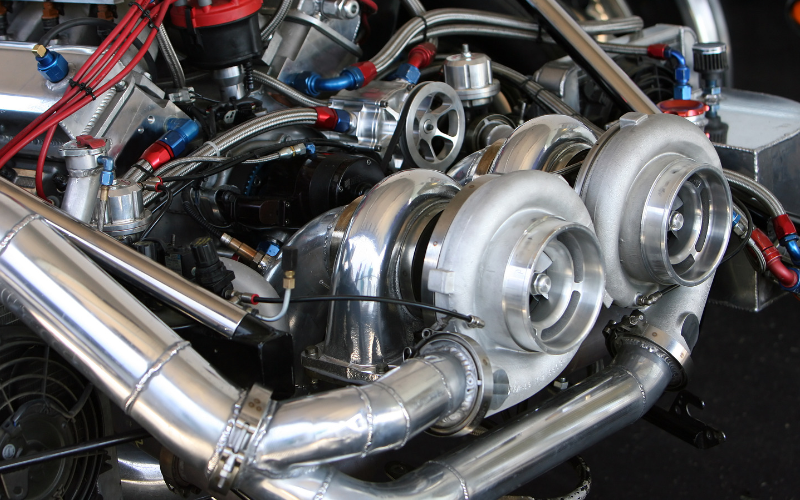
A boost leak is pressurized air escaping somewhere between the turbocharger’s compressor outlet and the engine’s intake manifold. On a heavy-duty diesel, even a small leak can reduce the amount of air reaching the cylinders, leading to less power, higher fuel consumption, and increased engine temperatures.
A leak can also put extra strain on the turbocharger. When the engine control module detects that boost pressure is below its target, it commands the turbo to work harder to make up the difference. On a variable geometry turbo (VGT), that typically means closing the vanes and increasing shaft speed. If the leak goes unchecked, something as simple as a loose hose clamp can eventually contribute to turbocharger damage and an expensive replacement.
The good news is that most boost leaks are relatively straightforward to repair once you locate the source. Below, we’ll cover the symptoms to watch for, the components most likely to leak, and a practical step-by-step process for finding the problem.
Signs You Have a Boost Leak
A boost leak often shows up as a gradual loss of performance rather than an obvious failure. You may notice that the truck feels sluggish or struggles to build power, especially when climbing a grade or pulling a heavy load. Other common warning signs include:
- Loss of power under load: The truck pulls fine empty but struggles on hills or when merging with a full trailer.
- Black smoke: With less air in the cylinders, fuel doesn’t burn completely.
- High exhaust gas temperatures (EGTs): A rich air-fuel mixture runs hot, which is hard on pistons, valves, and the turbine side of the turbo.
- Worse fuel mileage: The engine burns more fuel to do the same work.
- Hissing, whistling, or a “chuffing” sound: Gets louder as the boost builds.
- Low boost or turbo overspeed fault codes: Many ECMs will log a code when actual boost doesn’t match commanded boost, or when the turbo spins faster than it should trying to compensate.
- More frequent DPF regenerations: Incomplete combustion makes more soot, which loads the filter faster.
Any one of these can have other causes. Two or three together, especially low power plus high EGTs, point strongly toward the charge air system.
Common Causes of Turbo Boost Leaks
The charge air system on a Class 8 truck includes numerous hoses, connections, clamps, and fittings, all exposed to constant heat, vibration, and rapid pressure changes. Over time, that stress can cause even a well-maintained component to loosen, crack, or fail.
These are some of the most common causes of boost leaks.
1. Loose or Failed Hose Clamps
This is the most common cause, and the cheapest to fix. T-bolt and constant-tension clamps lose torque as the hoses heat up and cool down repeatedly. A clamp that was tight at the last service can back off enough to let a hose slip or weep air under full boost. Clamps that were reused after a repair or installed without the hose fully seated over the pipe’s bead, are frequent offenders.
2. Cracked, Split, or Oil-Soaked Hoses
Silicone charge air hoses don’t last forever. Over time they crack at the folds, split along the reinforcement layers, or swell and soften from oil. Oil is a bigger problem than it looks: a slick inner surface makes it easier for a hose to blow off its pipe the next time boost spikes. If you find a lot of oil inside the hoses, note it, because it can point to a turbo seal or crankcase ventilation problem that needs its own attention.
3. Charge Air Cooler (CAC) Leaks
The charge air cooler takes a beating. It sits up front in the path of rocks and road debris, and it expands and contracts with every heat cycle. Leaks usually show up at the tube-to-header joints or where the plastic or aluminum end tanks meet the core. These leaks often start small and only open up when the cooler is hot and pressurized, which is why a CAC can pass a quick look and still be the problem.
4. Cracked Charge Pipes
The metal tubes between the turbo, the cooler, and the intake can crack near welds and bends or wear through where they rub against a bracket, frame rail, or another line. A pipe that has been chafing for months may look fine from the top and have a hole underneath.
5. Intake Manifold and Gasket Leaks
Gaskets at the intake horn, the intake manifold, and the grid heater (on engines that use one) can harden and leak with age. EGR mixer connections on engines with exhaust gas recirculation are another place to check. These leaks are tougher to spot because they’re close to the engine and often hidden by other components.
6. Sensor Ports and Small Fittings
Boost pressure and intake air temperature sensors seal with O-rings that can crack or go missing after a sensor is replaced. Small lines that tee off the boosted side of the system, like a boost reference line, can also come loose or split.
7. Turbo Outlet Connections and Housing Damage
The connection right at the compressor outlet sees the highest temperatures in the charge system, so its clamp and seal wear faster. Less often, a compressor housing cracks from an impact or from a compressor wheel that contacted the housing because of worn bearings.
How to Find a Boost Leak
There’s no need to guess at the source of a boost leak. Start with the simplest checks and work your way toward more involved testing. In many cases, a systematic inspection can pinpoint the problem in less than an hour.
- Pull codes and check live data: Compare commanded boost to actual boost under load. On VGT engines, look at vane position and turbo speed too. If the ECM is commanding a closed vane position and still coming up short on boost, air is likely escaping somewhere.
- Do a visual inspection with the engine cold: Follow the charge air path from the turbo outlet to the intake manifold. Look for oily, dirty streaks around joints, since escaping air carries oil mist that traps road dust. Check every clamp for tightness and every hose for cracks, swelling, or signs it has moved on its pipe.
- Listen with the engine running: A helper revving the engine or a short loaded drive can make a leak audible. Never reach near the turbo or fan with the engine running.
- Pressure test the charge air system: With the engine off, cap the system at the turbo outlet and feed regulated shop air into it through a test adapter. Spray soapy water on every joint, hose, and the cooler core, and watch for bubbles. Keep test pressure within the engine maker’s specs and expect a little leak-down through any intake valves that are open.
- Test the charge air cooler on its own: If the system leaks but you can’t find the spot, remove the CAC hoses, cap both ends of the cooler, and do a pressure-decay test. Compare the drop over time to the cooler or truck manufacturer’s allowable leak rate.
- Use a smoke machine for small leaks: Smoke makes pinholes and hairline cracks easy to see, especially around the intake manifold and EGR connections.
- Verify the repair: After the fix, road test the truck under load and confirm that actual boost now tracks commanded boost and the codes stay clear.
When the Problem Is the Turbo Itself
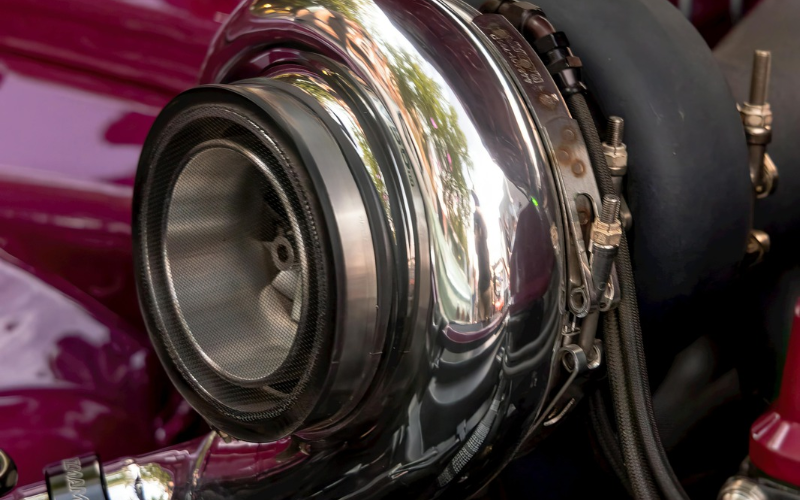
Sometimes the charge air system holds pressure without a problem, yet boost pressure remains low. When that happens, the turbocharger moves to the top of the troubleshooting list. Common turbo-side issues include sticking VGT vanes, a failing VGT actuator, worn bearings that allow excessive shaft movement, and a compressor wheel damaged by debris or contact with the housing. An exhaust leak ahead of the turbo can also reduce boost by allowing exhaust energy to escape before it reaches the turbine.
A boost leak that goes unaddressed for too long can damage the turbocharger as well. If the turbo has been working harder for months to compensate for lost air, the bearings or compressor wheel may be worn even after the original leak is repaired. Excessive shaft play, contact marks on the compressor wheel or housing, or significant oil buildup at the compressor outlet are signs that the turbo itself may need to be replaced rather than simply repairing the leaking hose.
Need a Replacement Turbo? Shop Remanufactured Turbochargers from HD Turbo
If your testing points to the turbocharger as the source of the problem, HD Turbo can help you get your truck back to full boost without the cost of a new OEM unit. We remanufacture heavy-duty turbochargers for Cummins, Detroit, PACCAR, Mack, and Volvo engines at our shop in Elk Grove Village, Illinois.
Every turbo we build is balanced as a complete assembly at speeds up to 300,000 RPM, flowbench tested, and checked with an oil leak tester before it leaves our shop. Our remanufactured turbos meet or exceed OEM specifications and come with a 12-month, unlimited-mileage warranty. We ship to all 50 states, and most U.S. customers receive a free FedEx return label for sending back their core.
Not sure which turbo your truck needs? Send us your VIN or engine serial number through our parts lookup, or call (847) 258-3785. Our team can help identify the correct turbo and get you on the road with the right replacement.
Shop Remanufactured Turbochargers →
Causes of Turbo Leaks FAQs
Can a boost leak damage my turbo?
Yes. When boost falls short, the ECM drives the turbo harder to compensate. Over time, that overspeeding can wear bearings and fatigue the compressor wheel.
Is it safe to keep driving with a boost leak?
A small leak won’t usually stop the truck, but it raises exhaust temperatures, increases soot, and stresses the turbo. Get it diagnosed soon rather than waiting for it to get worse.
How do I know if it’s a boost leak or a bad turbo?
Pressure test the charge air system first. If the system holds pressure and boost is still low, the turbo, VGT actuator, or a pre-turbo exhaust leak is the more likely cause.
Mission
We have ONE GOAL – provide you with a MORE POWERFUL and MOST RELIABLE turbocharger for years to come.
High Quality Products
Heavy-duty turbochargers are high-quality, produced in a state-of-the-art facility capable of balancing turbo components as well as whole rotating assemblies. Strict quality control.
Great Team
Our dedicated and detail-oriented team is always happy to help you – don’t hesitate to reach out with questions or comments.
NEED HELP?
GOT QUESTIONS?
Want to talk to our support team? Call us at (847) 258-3785
WE SHIP TO ALL 50 STATES. ORDER TODAY
HD Turbo ships diesel turbo parts and actuators to all 50 states.
-
Fast nationwide shipping on in-stock parts
-
Free return label to return the core (excl. Alaska, Hawaii, Puerto Rico).
-
Technical support available
SHOP
Product Categories
Diesel Turbos by Brand
- Cummins Turbos
- Detroit Turbos
- Paccar Turbos
- Mack Turbos
- Volvo Turbos
- Dodge Ram Turbochargers
- Mercedes Sprinter Turbos
Diesel Turbo Actuators by Brand
- Cummins Actuators
- Detroit Turbo Actuators
- Paccar Trubo Actuators
- Mack Truck Turbo Actuators
- Volvo Truck Turbo Actuators
Popular Diesel Turbos
- 6.7 Cummins Turbochargers
- Holset Turbos
- Cummins ISX Turbo
- Volvo D13 Turbos
- Mack MP8 Turbocharger
- Mack E7 Turbos
- HE451VE Turbos
Popular Diesel Turbo Actuators

2250 Estes Ave,
Elk Grove Village, IL 60007
Mon-Fri: 8AM - 4.30PM
Sat: 8AM - 12.00PM
Sun: Closed
 Authorized Dealer
®2018-2026 HD Turbo, LLC. All rights reserved.