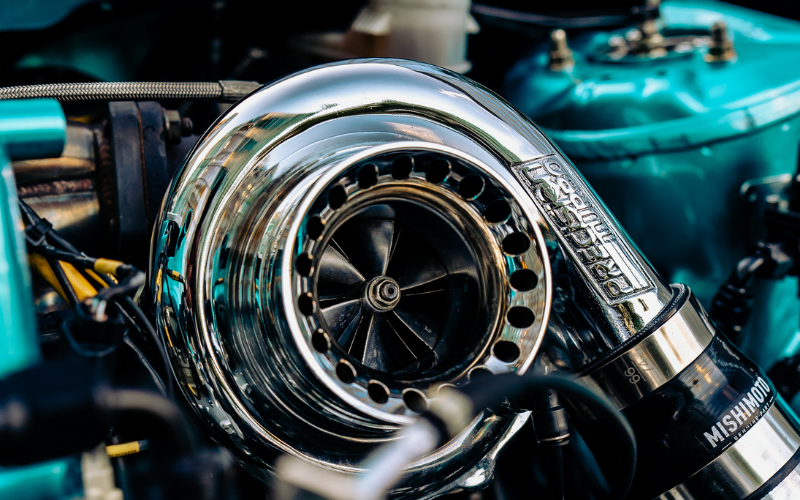
Most diesel drivers stop paying attention to their turbo after the first few thousand miles. A healthy turbo makes a soft whistle as it spools up and a light whoosh when you lift off the throttle. Otherwise, it fades into the background. When that familiar sound changes, you notice.
A turbo that suddenly sounds different usually points to one of four areas: the bearings, the compressor or turbine wheels, the actuator, or the plumbing around the turbo. The challenge is telling them apart. A whistle caused by a loose clamp may be a simple fix you can handle in the yard. A siren-like whine from a worn turbo shaft, however, can progress to a damaged compressor wheel and aluminum debris in the intake. Here’s how to identify the most common turbo noises on heavy-duty trucks and diesel pickups, what to check first, and when it’s time to stop troubleshooting and replace the turbo.
What a Normal Turbo Sounds Like
A diesel turbo shaft spins at tens of thousands of RPM, and in many applications, well beyond 100,000 RPM. At those speeds, some noise is normal. A faint whistle that rises and falls with boost is expected, as is a mild rush of air when the engine comes off load.
What matters is a change in the sound. If the turbo suddenly gets louder, develops a new tone, or sounds different than it did before, it deserves attention. One simple habit can make diagnosis easier: record a short video of the engine at idle and under light load while everything is operating normally. If the turbo starts sounding different later, you’ll have a baseline to compare against rather than relying on memory.
Turbo Whine: Usually Bearings or Wheel Damage
A problematic turbo whine is high-pitched and siren-like. It rises with engine RPM, is often loudest as the turbo spools, and may continue at cruise. Drivers sometimes compare it to the sound of a dentist’s drill.
- Bearing wear: The turbo shaft rides on a thin film of engine oil, so problems with oil supply can quickly take a toll. Dirty or low oil, the wrong oil grade, delayed oil flow during cold starts, hot shutdowns, or a restricted feed line can accelerate bearing wear. As the bearings wear, the shaft develops excessive play, the compressor and turbine wheels can begin to wobble, and eventually a wheel may contact its housing. That contact often produces the characteristic whine.
- Damaged compressor wheel: A torn air filter, loose hardware, or debris left in the intake during service can nick or bend the blades. Even minor damage can throw the wheel out of balance at turbocharger speeds.
Other symptoms may appear alongside the whine, including oil in the intake piping or charge-air cooler, blue-gray exhaust smoke, increasing oil consumption, and a noticeable loss of power.
To inspect the turbo, shut the engine off and let it cool completely. Remove the intake pipe from the compressor inlet and inspect the wheel. Look for nicked, bent, or damaged blade tips. Then gently check the shaft for movement. A small amount of side-to-side play can be normal on some turbochargers because the bearings operate on an oil film, but noticeable in-and-out movement is not. The compressor wheel should also never contact the housing, even when you gently move the shaft to one side. Check the housing for rub marks as well. While you’re there, inspect the air filter and check the engine oil level and condition.
A bearing-related whine is not something to ignore. As wear progresses, the noise can get louder and the wheel can eventually contact the housing. If the wheel or shaft fails, metal and other debris can enter the intake system and cause much more extensive engine damage.
Turbo Whistle: Usually a Boost Leak
Since a mild whistle is normal, the key question is whether the sound is new or noticeably louder. A problem whistle often sounds more like a sharp hiss or shrill note under load, especially when pulling a grade, and fades when you lift off the throttle. Its pitch tends to track boost pressure rather than engine speed alone.
That usually points to pressurized air escaping somewhere between the compressor outlet and intake manifold. Common trouble spots include cracked charge-air cooler tanks or tubes, which are subjected to constant vibration and heat cycles; split or swollen boots; loose T-bolt clamps; and leaking intake manifold gaskets. On diesel pickups, intercooler boots are a particularly common culprit.
A boost leak can cause more than noise. You may see lower boost readings, sluggish acceleration, black smoke from excess fuel relative to available air, higher exhaust gas temperatures, reduced fuel economy, or underboost fault codes.
Start with a visual inspection. Look for oily residue around boots, couplers, and clamp joints, where oil mist from the intake can accumulate around a leak. Spraying soapy water over suspected connections while the system is pressurized can reveal a leak through bubbling. A shop can also cap the intake tract and pressurize it with low-pressure air to find leaks that may only open under boost.
Exhaust-side leaks have a different sound. A cracked exhaust manifold or leaking turbo mounting gasket typically produces a ticking or puffing noise that is loudest on a cold start and becomes quieter as the metal heats and expands. Soot marks around the joint are a strong clue.
The whistle itself may not be coming from the turbo, but a boost leak can still put extra stress on it. On variable-geometry turbos, the engine computer may close the vanes to compensate for the missing boost, increasing turbo speed and exhaust gas temperatures. Fix the leak promptly rather than letting the turbo work harder to make up for lost boost.
Turbo Rattle: Actuator, Vanes, or Loose Hardware
A rattle sounds like a metallic clatter or buzz, often at idle or under light load. It may come and go, and some rattles appear only when you turn the key on or shut the engine down.
Start with the simplest possibility: a loose heat shield or exhaust clamp. These are common sources of rattling around the turbo and easy to rule out before digging deeper.
On many modern heavy-duty engines, including the Cummins ISX and X15, PACCAR MX-13, Detroit DD15, Volvo D13, and Mack MP8, the turbo uses variable geometry controlled by an electronic actuator. Over time, soot and carbon can build up in the vane or nozzle mechanism, causing it to stick. Worn actuator gears or a failing actuator motor can also produce a chatter, click, or buzz. Many actuators perform a position sweep when you turn the key on, so a grinding or clicking sound at key-on can point to an actuator problem. VGT position or actuator fault codes often accompany these issues. HD Turbo’s error code lookup can help identify the component associated with a specific code.
On older fixed-geometry turbos equipped with a wastegate, a worn wastegate flapper or bushing can produce a similar rattle, particularly at idle.
If the actuator itself is the only failed component, it can sometimes be replaced without replacing the entire turbo. HD Turbo stocks remanufactured turbo actuators for major engine makes. If the vane mechanism is seized by carbon buildup, however, the turbo will typically need to be removed for further inspection or repair.
A loose heat shield is mostly an annoyance. A sticking VGT is a different matter. It can cause overboost or underboost faults, engine derates, and poor regeneration performance, so it should be diagnosed before the problem gets worse.
Grinding, Scraping, or a Sudden Loud Siren: Stop Driving
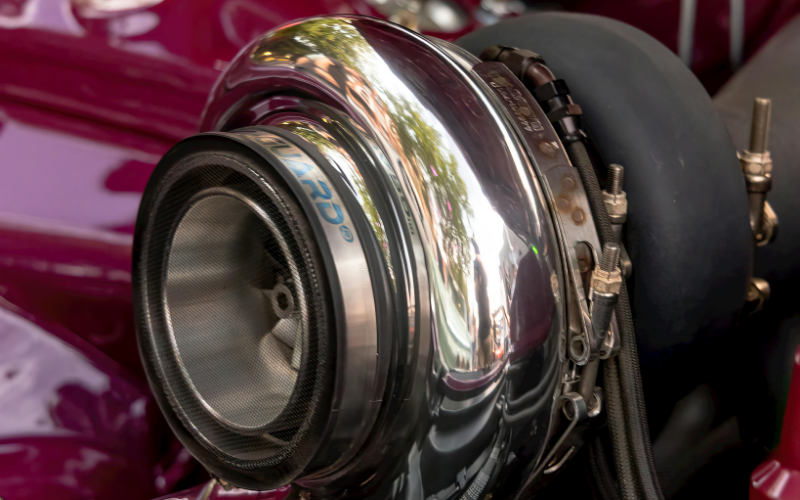
These sounds usually mean a turbo wheel is contacting its housing, which is a serious failure. Shut the engine down as soon as it is safe to do so. Continuing to run it can break compressor wheel fragments loose and send them into the engine or allow damaged turbine wheel pieces to travel downstream into the exhaust and aftertreatment system.
A failing turbo seal can also push engine oil into the intake. In severe cases, that oil can become a fuel source for the engine and trigger a diesel runaway, making the situation potentially dangerous. Do not continue driving a truck that is showing signs of catastrophic turbo failure.
Quick Reference: Noise vs. Likely Cause
| Noise | Most likely cause | Urgency |
| Soft whistle that rises with boost | Normal operation | None |
| High-pitched, siren-like whine | Bearing wear or damaged compressor wheel | High |
| Loud whistle or hiss under load | Boost leak (CAC, boots, clamps) | Moderate |
| Ticking, loudest when cold | Exhaust manifold or turbo gasket leak | Moderate |
| Rattle at idle or key-on | Heat shield, VGT actuator, or sticking vanes | Low to moderate |
| Grinding or scraping | Wheel contacting housing | Stop driving |
Fix the Cause Before You Replace the Turbo
Turbos rarely fail without an underlying cause. Oil-related problems account for many failures, including low oil level, contaminated oil, extended drain intervals, kinked or restricted feed lines, and clogged or restricted drain lines. Foreign-object damage from a damaged air filter or debris entering through the intake is another common cause. Repeated hot shutdowns, excessive exhaust restriction from a plugged DPF, and fueling problems that drive exhaust temperatures too high can also shorten turbo life.
Before installing a replacement turbo, address the conditions that may have caused the original failure. Change the engine oil and filter, replace the oil feed line and gaskets according to the manufacturer’s recommendations, and verify that the oil drain line is clear. Clean oil and debris from the charge pipes and charge-air cooler and install a new air filter.
Before the first start, prime the replacement turbo with clean engine oil according to the manufacturer’s procedure. Then start the engine and let it idle for a few minutes while checking for leaks and abnormal noise. Skipping these steps can put the new turbo right back into the conditions that caused the old one to fail.
Remanufactured Turbochargers from HD Turbo
If your turbo is whining, grinding, or showing excessive shaft play, replacement may be the safest option. HD Turbo, based in Elk Grove Village, Illinois, remanufactures heavy-duty diesel turbochargers for Cummins, Detroit, PACCAR, Mack, Volvo, Dodge Ram, and Mercedes Sprinter applications.
Each turbo is balanced as a complete assembly at speeds up to 300,000 RPM, flowbench tested, and checked with an oil leak tester. HD Turbo builds its remanufactured units to meet or exceed OEM specifications. Every turbo comes with a 12-month, unlimited-mileage warranty, and HD Turbo provides a free FedEx return label for your core from most U.S. locations, excluding Alaska, Hawaii, and Puerto Rico.
Not sure which turbo fits your engine? Send your VIN or engine serial number through the Find Parts Now form, or call (847) 258-3785. The HD Turbo team can match your truck with the correct replacement turbo. Shop remanufactured heavy-duty turbochargers from HD Turbo
Turbo Whine, Whistle, or Rattle FAQs
Is it normal for a diesel turbo to whistle?
Yes. A soft whistle that rises and falls with boost is normal. A whistle that’s suddenly louder, shriller, or turns into a hiss under load usually points to a boost leak.
Can I keep driving with a whining turbo?
Not for long. A siren-like whine usually means bearing wear or wheel damage, and it gets worse until a wheel contacts the housing. Have it inspected as soon as possible, and stop driving if you hear grinding.
How do I tell a turbo noise from a boost leak?
A boost leak usually follows boost pressure and comes with lower boost readings, black smoke, and underboost codes. A bearing or wheel problem tends to follow engine RPM and often comes with oil in the intake or visible shaft play.
Can a bad turbo actuator make noise?
Yes. A failing VGT actuator can click, buzz, or grind, especially during its key-on sweep. It usually sets actuator or VGT position codes as well.
What causes a turbo to fail?
Oil problems cause most failures, followed by debris entering the compressor, hot shutdowns, and high exhaust temperatures or restriction.
Mission
We have ONE GOAL – provide you with a MORE POWERFUL and MOST RELIABLE turbocharger for years to come.
High Quality Products
Heavy-duty turbochargers are high-quality, produced in a state-of-the-art facility capable of balancing turbo components as well as whole rotating assemblies. Strict quality control.
Great Team
Our dedicated and detail-oriented team is always happy to help you – don’t hesitate to reach out with questions or comments.
NEED HELP?
GOT QUESTIONS?
Want to talk to our support team? Call us at (847) 258-3785
WE SHIP TO ALL 50 STATES. ORDER TODAY
HD Turbo ships diesel turbo parts and actuators to all 50 states.
-
Fast nationwide shipping on in-stock parts
-
Free return label to return the core (excl. Alaska, Hawaii, Puerto Rico).
-
Technical support available
SHOP
Product Categories
Diesel Turbos by Brand
- Cummins Turbos
- Detroit Turbos
- Paccar Turbos
- Mack Turbos
- Volvo Turbos
- Dodge Ram Turbochargers
- Mercedes Sprinter Turbos
Diesel Turbo Actuators by Brand
- Cummins Actuators
- Detroit Turbo Actuators
- Paccar Trubo Actuators
- Mack Truck Turbo Actuators
- Volvo Truck Turbo Actuators
Popular Diesel Turbos
- 6.7 Cummins Turbochargers
- Holset Turbos
- Cummins ISX Turbo
- Volvo D13 Turbos
- Mack MP8 Turbocharger
- Mack E7 Turbos
- HE451VE Turbos
Popular Diesel Turbo Actuators

2250 Estes Ave,
Elk Grove Village, IL 60007
Mon-Fri: 8AM - 4.30PM
Sat: 8AM - 12.00PM
Sun: Closed
 Authorized Dealer
®2018-2026 HD Turbo, LLC. All rights reserved.